
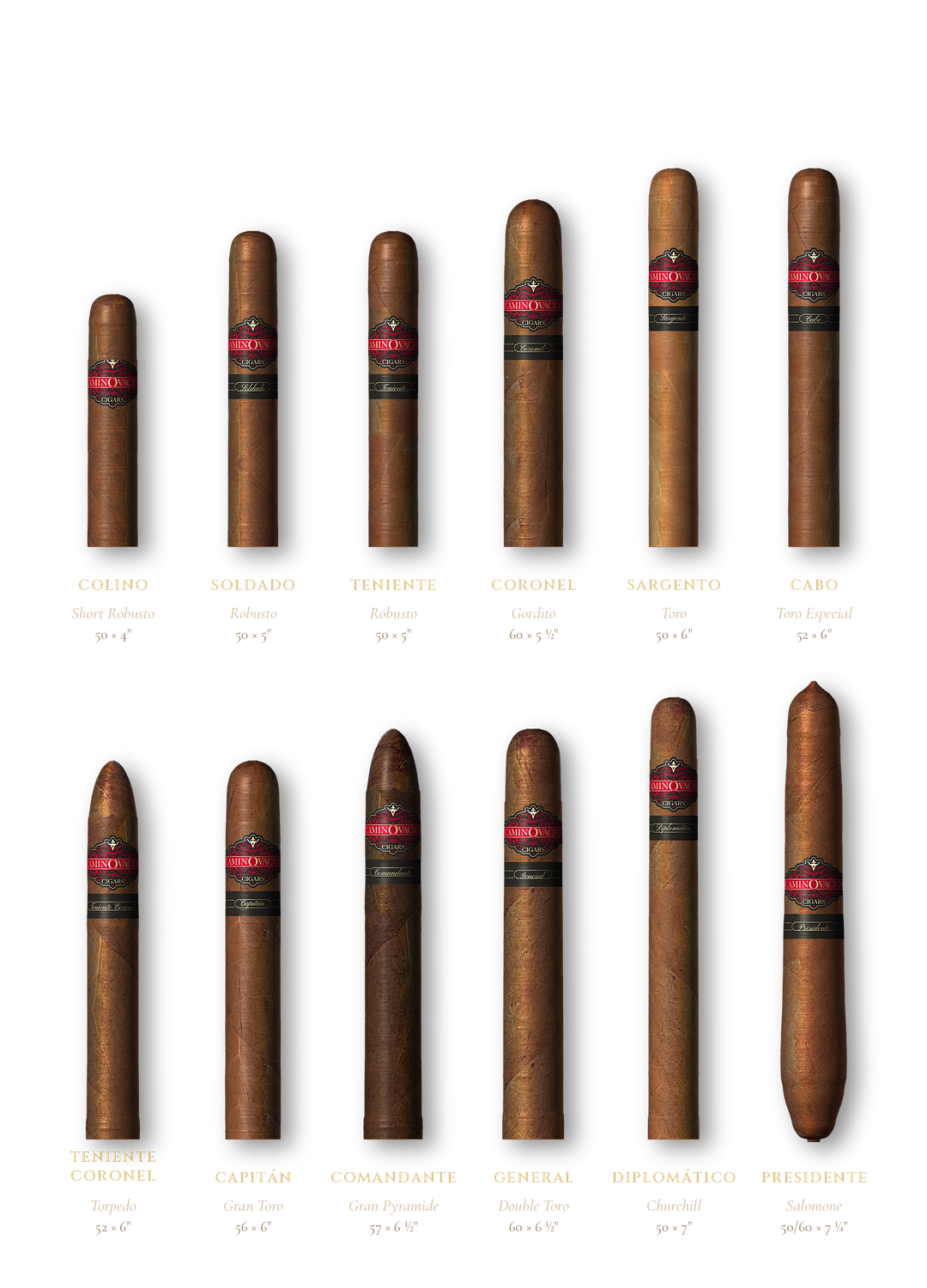
Select the appropriate cigar ring size and enjoy.
5 min read
First impressions often arise from the format: a slender Panatela with espresso, a well-balanced Robusto after a long day of business, or a generous ring gauge for leisurely conversations. Choosing the right cigar ring gauge isn't about a mere number. It's about rhythm, temperature, flavor profile, and the character of the moment.
Ring gauge is not a measure of quality. A slim cigar is not necessarily finer, nor is a full-bodied one automatically more intense. What matters is how the format interacts with the blend, the occasion, and personal taste. This artful balance is particularly evident in hand-rolled premium cigars.
What the ring gauge of a cigar actually describes
The ring gauge refers to the diameter of a cigar and is traditionally given in 64ths of an inch. A ring gauge of 50 therefore corresponds to 50/64 inches, approximately 19.8 millimeters. For enjoyment, this number is less abstract than it initially seems: it influences how much tobacco is packed inside and how the individual leaves unfurl in the smoke.
Besides the ring gauge, the length also significantly influences the smoking experience. Both values are related but serve different purposes. The length primarily determines the potential smoking duration and how the cigarette develops over time. The ring gauge, on the other hand, has a greater impact on the draw, smoke volume, temperature, and the ratio of filler, binder, and wrapper .
A larger format offers the blender more room to combine different tobaccos. It can support complex blends, appear creamy, and produce a full-bodied, cool smoke. A slimmer ring gauge often showcases the wrapper more prominently, appears more concentrated, and can convey aromas with remarkable clarity. Neither is inherently superior; they are different expressions of the same craftsmanship.
Choose the correct cigar ring gauge: taste over habit
Many aficionados routinely reach for the same vitola. That's understandable, but not always the most appealing choice. Those who consciously select a cigar should first ask themselves: What kind of experience do I want this moment to be?
For a shorter, more focused experience, medium to slim ring gauge cigars are usually the best choice. They accompany an espresso, a late afternoon, or a focused break without any fuss. With a high-quality blend, these formats can reveal a surprising depth because the smoke remains direct and clear.
A medium ring gauge, often in the range of a classic Robusto or Toro, is considered by many connoisseurs to be the perfect balance. It combines sufficient volume for a complex blend with a manageable, elegant presence. The draw is usually pleasantly open, the smoke production controlled, and the flavors can develop at their own pace. Those just discovering their personal smoking style often find a reliable starting point here.
Large-format cigars demand more time and attention. They are perfect for long dinners, private gatherings, an evening on the terrace, or a conversation that naturally shifts from business to friendship. Their wider diameter can make the blend seem smoother and cooler. At the same time, such a format requires careful construction and a steady hand while smoking. Drawn too quickly, even an excellent cigar loses its elegance.
The diameter changes the character of the mixture.
The same blend can taste surprisingly different in two different ring gauges. In a slimmer vitola, the wrapper has a proportionally greater influence. Spicy, earthy, peppery, or subtly sweet nuances of the wrapper can be more pronounced. The smoke often feels more focused, the development more immediate.
As the diameter increases, so does the proportion of filler tobaccos. This creates more possibilities for transitions: wood can meet cocoa, roasted nuts can meet creamy sweetness, leather can meet dried fruit. A wider format can also keep the smoke cooler, as the airflow is different and the embers are less concentrated.
But here too, the rule applies: bigger doesn't automatically mean milder, and smaller doesn't necessarily mean stronger. A cigar's strength primarily depends on its origin, priming, aging, leaf selection, and recipe. A large-format blend with a high ligero content can be exceptionally powerful. Conversely, a slim cigar made from gently aged tobaccos can remain remarkably balanced and approachable.
For connoisseurs, this very differentiation is part of the enjoyment. It's not just the ring gauge that matters, but rather the intention behind the blend. Ideally, in a boutique cigar, the format isn't an afterthought, but a deliberate vessel for the character of the blend.
Traction behavior and construction: Precision is noticeable
A properly sized cigar only reveals its true potential if it has been rolled cleanly. With handmade cigars, the tension of the filler is just as important as the quality of the binder and the care taken by the torcedor. The ideal draw offers resistance without requiring effort; it feels neither empty nor blocked.
Wider cigars don't automatically forgive an uneven filling. On the contrary: because more tobacco is used, the construction demands particular precision. With slimmer formats, the challenge is different. Here, the cigar must maintain sufficient airflow, even though the internal space is limited.
When buying a cigar, look for a consistently firm but not hard feel. Minor variations along the body are possible with handmade cigars, while hard spots can indicate an uneven draw. A flawless wrapper, a neatly crafted cap, and a balanced weight complete the overall impression. They don't replace the smoking experience, but they are good indicators of care.
Combine format and occasion with attitude
The right cigar depends not only on personal taste but also on the time you can dedicate to it. Interrupting a cigar because the next appointment is pressing diminishes its value and the moment itself. Therefore, choose a ring gauge that suits your actual available time.
A compact format is suitable for about 30 to 45 minutes. For an hour or slightly more, a Robusto, depending on its construction and smoking pace , often offers a well-balanced experience. Toro and larger formats can provide significantly longer smoking times. However, the individual smoking duration varies depending on the length, moisture content, draw technique, and how calmly the cigar is smoked.
The beverage also deserves attention. A slightly larger ring gauge can harmonize with a rich, aged rum or a full-bodied whisky, as it allows for depth and smooth transitions. With champagne, mineral water, or a light coffee, a slimmer, more aromatically precise format often works particularly well. The best combination doesn't follow any rigid rule; it allows both partners room to shine.
At Caminovacion Cigars, this choice is part of the culture of enjoyment: consciously perceiving origin and maturity, understanding the format as part of the composition, and giving the conversation the same value as the smoke.
A practical way to determine personal preference
If you want to refine your preferences, you shouldn't change several unknown factors at once. First, choose a blend that appeals to you and, if possible, experience it in two different formats. You don't need to write anything down. It's enough to pay attention: Does the smoke seem thicker or clearer? Does the sweetness appear sooner? Does the temperature remain pleasant? Which cigar suits your natural smoking pace better?
Don't smoke too quickly. One puff per minute, depending on the format and your drawing technique, gives the ember time to work in a controlled manner. If the smoke becomes hot or bitter, a short pause is usually more helpful than a stronger puff. Especially with larger ring gauges, elegance comes from patience.
Storage also influences the overall impression. A cigar that is too dry burns faster and can be harsh. A cigar that is too moist draws poorly and is reluctant to open. Even the most suitable ring gauge cannot reveal its full character if the cigar has not been properly aged and stored.
Ultimately, the ideal ring gauge isn't a status symbol or a matter of rules. It's the size in which a cigar convincingly tells its story—and in which you find the time to listen to it. Next time you're out and about, don't automatically reach for the familiar. Choose the format that suits the moment.