
Five quality characteristics of hand-rolled cigars
A hand-rolled cigar doesn't reveal its quality only with the first puff of smoke. It shows itself in the light, under the fingers, and in the quiet moments before lighting. Those who know the five hallmarks of hand-rolled cigars don't just judge brand, size, or origin. They recognize the craftsmanship behind the enjoyment: the patience during aging, the precision of the torcedor, and the balance of a carefully composed blend.
For connoisseurs, quality isn't a loud promise. It's palpable. A high-quality cigar accompanies a conversation without dominating it. It develops calmly, remains reliably consistent in its draw, and retains its character until the final third. This is precisely the difference between a cigar that merely looks good and one that creates a lasting memory.
The five quality characteristics of hand-rolled cigars
1. The cover page: The first business card
The wrapper leaf is more than just a pretty casing. It's the most visible leaf of the cigar and shapes the first impression as well as contributing to its aroma. A high-quality wrapper leaf appears fine, elastic, and uniform. It may display natural veins—tobacco is a natural product—but should not appear coarse, dry, cracked, or stained.
Its tension is crucial. If the leaf lies neatly against the body, without loose spots or noticeable creases, this indicates meticulous work. The cap at the head of the cigar should be precisely positioned. It protects the wrapper when cut and reveals much about the care with which the final step was performed.
Color alone is not a measure of quality. A dark Maduro wrapper is not automatically more refined than a lighter Claro or Colorado. It primarily indicates a different treatment of the tobacco and a distinct flavor profile. Harmony is key: color, texture, and sheen should all work together harmoniously. A finely oiled, natural sheen is desirable. An artificially glossy appearance, however, should raise suspicion among connoisseurs.
2. The rolling motion: Precision you can feel
A cigar doesn't become a premium cigar simply because of its perfect appearance. However, the rolling technique determines whether its interior can later reach its full potential. Take the cigar between your thumb and forefinger and gently press along its entire length. It should be firm but not hard, evenly filled, and free of any noticeable gaps.
A cigar rolled too loosely can lead to a hot, uneven burn. Conversely, an overly tight roll makes it difficult to draw and diminishes the blend's expressiveness. The torcedor must position the filler leaves in such a way as to create air channels without compromising the cigar's density. This balance cannot be rushed; it arises from experience, a steady hand, and a deep understanding of the behavior of each individual tobacco.
Ring gauge and format also play a role. A slimmer format often reveals nuances more directly and intensely. A larger ring gauge allows more room for different filler tobaccos and thus for more complex transitions. Neither is inherently superior. The quality is revealed in whether the construction and blend convincingly support the chosen format.
3. The Train: Freedom with Resistance
The draw test before lighting is one of those little rituals that reveals a lot about a cigar. After a clean cut, the air should flow evenly through the cigar. Not effortlessly like through an empty straw, but also not so difficult that you have to work to produce smoke.
The ideal draw offers a light, pleasant resistance. This ensures that the smoke remains cool, the aromas are clearly conveyed, and the enjoyment is not rushed. While an open draw might seem convenient, it often leads to a rapid, hot burn. A draw that is too tight makes even an excellent blend inaccessible.
This demonstrates why artisanal quality control is indispensable. Every cigar is made from natural leaves, whose strength and moisture content can vary. A premium brand doesn't approach this diversity with indifference, but with selection, testing, and experience. Swiss precision and Dominican tobacco tradition converge precisely at this point: in the consistency with which a natural product is transformed into a reliable experience.
4. Maturity and tobacco: Depth takes time
The finest cigar begins with the raw material. Tobacco must not only come from a credible source, but also be expertly fermented, sorted, and aged . Only this time removes excess harshness, rounds out its texture, and allows for the depth that discerning aficionados seek.
Good tobacco already has a nuanced aroma when unlit. Depending on the blend, notes of cedar, earth, leather, cocoa, roasted nuts, coffee, or dried fruit may be present. This aroma isn't a definitive judgment, but a subtle indication of care and maturation. Harsh, ammonia-like, or musty notes, on the other hand, are warning signs. They can indicate insufficient fermentation, problematic storage, or a cigar that hasn't yet settled.
Maturity doesn't mean that every cigar must be stored for as long as possible. Some blends are deliberately designed to offer early accessibility and excitement. Others gain smoothness and complexity over the years. What's crucial is the intention behind the blend. A good master blender doesn't compose for an abstract ideal, but for a specific moment: a focused afternoon, a long dinner, a close gathering, or a conversation that deserves time.
5. Burn rate and aroma balance: The proof at the moment
Only when smoked do all the elements come together: leaf, rolling, maturation, and blend. A clean burn is therefore one of the clearest indicators of quality. The ash doesn't have to be snow-white—its color depends on minerals in the soil and the tobacco's structure. What's important is that it remains stable and the burn ring is mostly straight.
Minor adjustments with a lighter can occur even with very good cigars, especially in windy conditions, fluctuating humidity, or if the lighter is uneven. A premium cigar doesn't need to burn perfectly sterile. However, it shouldn't require constant attention. If it repeatedly goes out, burns unevenly, or becomes bitter and hot, the cause is often related to its construction, humidity, or smoking speed.
Even more important than technique is balance. A strong cigar can be elegant, a mild cigar can possess great depth. Quality isn't measured by strength, but by control. The aromas should develop without overpowering each other. In the first third, a cigar might be subtle and creamy, in the second spicier and richer , and in the final more powerful and earthy. This transformation isn't an effect for its own sake. It's the expression of a blend whose components are engaged in a dialogue with one another.
Assessing quality correctly: Context matters
Even an excellently crafted cigar can disappoint if stored incorrectly or smoked in excessive humidity. Too much moisture makes the draw difficult, the burn uneven, and the aroma muted. If it's too dry, the wrapper becomes brittle, the smoke hot, and the flavor flat. Proper storage is therefore not a trivial matter, but rather a sign of respect for the craft.
Your own moment matters, too. A complex, full-bodied cigar after a light lunch is perceived differently than after a long dinner. A smaller format might be the better choice when time is short. A large cigar demands attention and an environment that allows for it. Connoisseurs choose not only based on ratings, but also on the occasion, the company, and their mood.
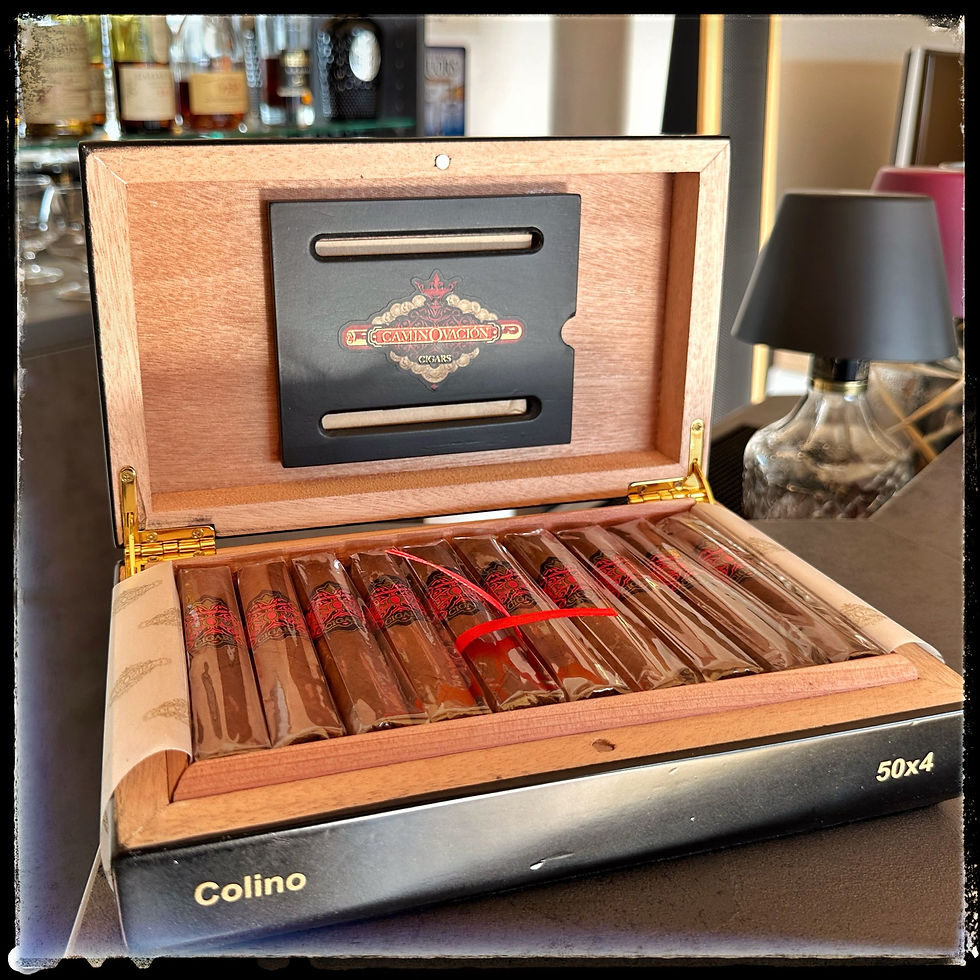
Caminovacion Cigars understands this approach as a fusion of heritage and ambition. Hand-rolled Dominican tobaccos, matured with patience and presented with Swiss clarity, are created for those who can take their time. Not for fleeting consumption, but for a consciously chosen moment.
The best way to test a cigar is therefore personally: Take your time with it, observe its character, and don't just compare strength or price. Pay attention to whether it exudes tranquility, whether it opens up over time, and whether it adds something to the conversation. A truly good hand-rolled cigar doesn't end with the ash. It lingers in the room as an atmosphere.


Comments